
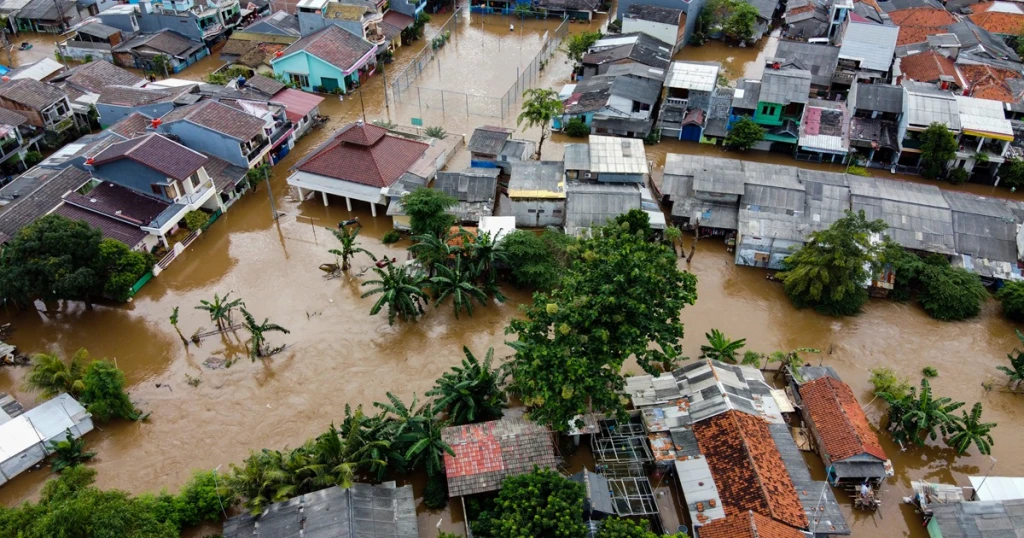
AI is rapidly becoming a valuable tool to help insurers manage data, identify fraud, handle more mundane tasks and see things the human eye could miss. Digital Insurance has been exploring AI's role across a number of areas, and its introduction into the imagery space is transforming how carriers can use photos and other images for underwriting and claims.

In this Q&A, Ryan Bank, global managing director at Vexcel, discusses how AI is changing the use of images, how it amplifies certain aspects of imagery, its use in underwriting and claims, and the possible risks associated with the use of AI. This interview has been edited for content and space.
1. How is AI changing what companies can do with images and how they are able to use them?
AI is transforming what companies can do with images, shifting them from static pixels to a continuously updated intelligence layer for risk and decision-making. Instead of relying on simple object recognition, AI can now understand context, draw inferences, and extract deeper meaning from high-resolution aerial imagery to make sense of the physical world. We call this Real World AI. For the first time, companies aren't just looking at a picture, they're interacting with a live, searchable map of the planet.
Traditional AI and machine learning approaches were primarily informed by online text or required extensive, time-consuming training based on narrow assumptions. For example, identifying pools might depend on detecting clusters of blue pixels, training models on that pattern, and applying it across regions. These approaches are difficult to scale and limited in what they actually understand.
That's what makes Real World AI so powerful, and why it's going to transform how insurance businesses operate. Fueled by aerial imagery, it enables a shift from periodic, manual assessments to continuous, property-level intelligence, which will ultimately influence how
With Vexcel Intelligence, we understand every location in our archive and make it searchable. Our model doesn't just detect objects, it interprets the real world and understands context, relationships, and change across each property. This is Real World AI in practice, and it's only going to become more powerful as the underlying imagery library continues to grow.
2. What kinds of image details can AI help improve or clarify?
AI can enhance and
Recently, we spoke with an agricultural insurer interested in locating hay bales near roads. Their concern was drivers throwing cigarettes out of windows and starting fires. Historically, no one would have trained a model for something that specific, dismissing it as too expensive, time-consuming, and niche. But because our intelligence already understands what a hale bale is and whether it's next to a road, all we needed to do was search our imagery to surface these locations. We had results almost instantly.
That is what AI-powered context grounded in real-world data makes possible. Instead of sifting through isolated data points, insurers gain a complete understanding of the risk at a property or across a region. They are no longer limited to searching for individual features. They can ask AI to identify broader risk concepts, even if they don't know exactly which objects to look for.
3. How are you using AI to make images searchable for insurers?
Our intelligence is essentially Ctrl+F for the physical world. Until now, AI has relied almost entirely on online text to understand reality, creating a massive disconnect between what you can find online and what actually exists on the ground. We're closing that gap.
While traditional models require tens of thousands of hand-labeled examples just to identify a single feature, our intelligence operates on a single foundational model. Its embedding-based approach lets AI recognize essentially anything it can see across our imagery without being explicitly trained on it first.
For insurers, this means you can query imagery for specific conditions or characteristics intuitively and at scale. Want to find properties with well-maintained lawns and garden beds as positive risk signals? Search for it. Want to surface deferred maintenance or encroaching vegetation before a renewal? Search for it. AI makes our imagery an active intelligence asset, rather than a file you pull up after a claim.
4. Aerial imagery plays an important role in underwriting and claims for carriers. Are they able to use images to track changes to an area or property over a period of time E.g., home or building improvements, expanded risks from flooding.
This is one of the most powerful yet underutilized capabilities in insurance. By pairing AI with consistent, high-quality image capture and historical archives, insurers can compare conditions across different time periods to identify changes such as property modifications, new structures, or environmental changes.
One distinction worth noting for insurers is that aerial imagery is different from satellite imagery. Aerial is captured at much higher resolution from planes, making it far better suited for detecting the kinds of property-level details, like a new outbuilding, encroaching vegetation, or changes in drainage, that actually influence underwriting decisions. For climate and environmental risk specifically, that resolution difference becomes even more consequential, since subtle landscape changes that might indicate flood or wildfire exposure are often invisible from space but clearly apparent from the air.
5. There are some concerns about privacy issues as more images are uploaded to AI and other programs. How do data companies like Vexcel handle these issues when they arise? Do regulations vary from country to country?
Vexcel imagery is captured from aircraft, in compliance with Air Traffic Control (ATC) rules, flight permits, and privacy laws. ATC regulations are global and apply to all ICAO member states. Think about what you see when looking out the window of an airplane. The imagery is detailed enough to identify property and building features such as roofs, trees, and pools. It is not detailed enough to identify faces or license plate numbers.
6. What should insurers keep in mind when integrating AI into their imagery?
The most important thing insurers should keep in mind is the shift from features to queries and questions. Traditional approaches trained models to look for specific attributes, e.g., a blue pixel cluster to find a pool. But when integrating AI into your imagery strategy, the goal shouldn't be modeling to a feature. It should be getting to a place where you can ask the AI exactly what you need to know. Show me properties with high fire risk. Show me low-risk buildings in this region. The insurers who will get the most out of AI are the ones who stop asking "what features should I be looking for?" and start asking "what do I actually need to know?


