
Artificial Intelligence and Insurance
Artificial intelligence is making its mark on the insurance industry, helping companies work smarter and serve customers better. From speeding up claims to spotting fraud and tailoring policies, insurers are finding creative ways to put AI to use. But with new technology come new challenges around fairness and trust. You'll find breaking news, insights, op-eds from top thought-leaders, and annual/quarterly rankings of how artificial intelligence and insurance intersect — and what it means for the future of the insurance industry.
-
The broker experience is determined not by how quickly a risk can be submitted, but by how efficiently and confidently a carrier evaluates it.
6h ago MGT Insurance
 -
Andrew Dalton, chief product officer, spoke about the challenges and risks presented by property data and how the MGA is using AI technology.
 6h ago
-
Insurance expert Kenneth Saldanha says workflow and volume solutions are startups' biggest focus.
August 25
-
Investors are committing almost 10 times as much as they were three years ago, but they are also setting higher standards for efficiency and profitability.
August 24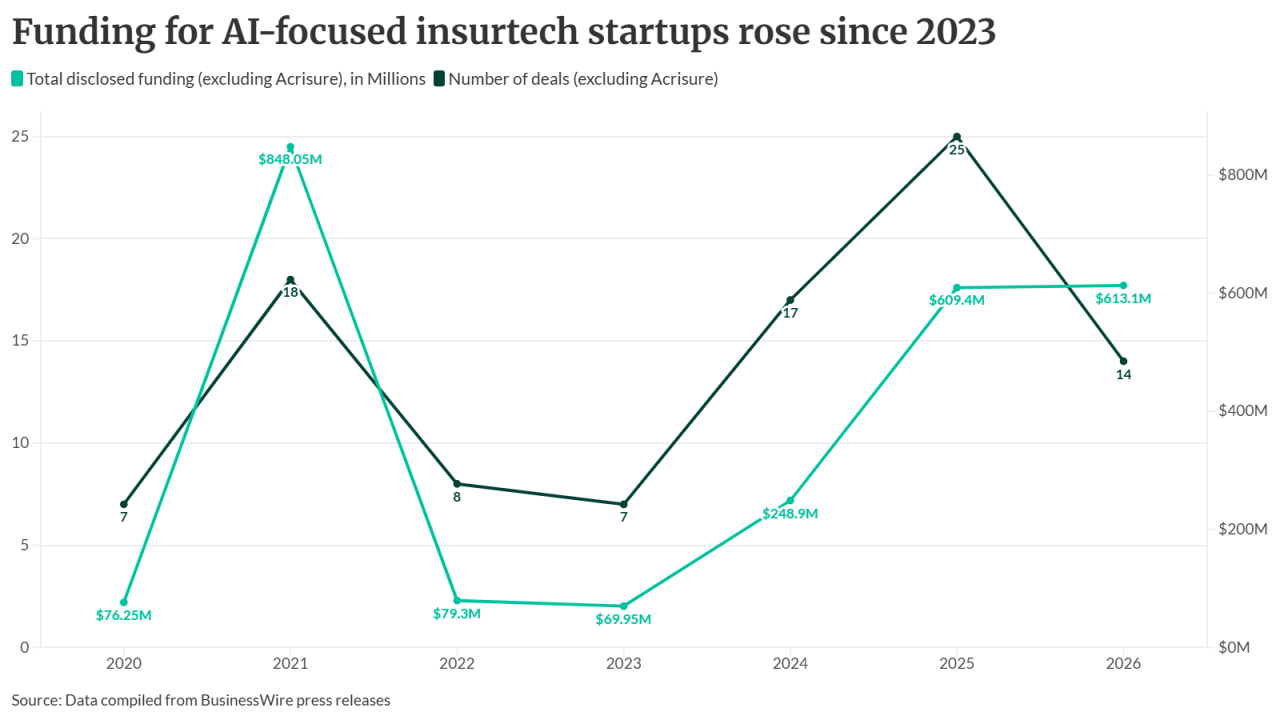
-
American Growth Insurance expects its in-house AI brokerage platform to improve risk transfer protocols, open cross-selling opportunities and increase its client base.
August 24
-
The explosive growth of data centers, which fuel a seemingly insatiable global demand for AI services, is creating a huge demand for insurance policies covering a wide range of risks.
 August 21
-
The high-risk delay is not a compliance holiday. It is time to make AI evidence, procurement and accountability operational, according to Corto Romagny, general manager for U.S. Operations at Uxopian Software.
August 20 Uxopian Software


AI: Key Questions & Analysis
How will Gen AI impact the insurance industry?
Gen AI is helping insurers automate claims, detect fraud, and personalize customer interactions, making processes faster and more efficient. It also enables companies to uncover deeper insights from their data and deliver better service at lower costs. Some of the most impactful Gen AI use cases in the insurance industry are listed below.Key use cases:
What are the biggest challenges of implementing artificial intelligence in insurance operations?
Insurers are keen on the potential of AI, yet implementing it isn't necessarily straightforward. Many are grappling with how to mesh new AI software with legacy systems, tidy up unstructured data, and win over skeptical teams resistant to changing the way they work. On top of that, they need to ensure they're remaining on the right side of regulations, keeping algorithms free of bias, and keeping everything transparent for customers. To actually make AI work, insurers need to have good governance, a definite goal, and regular check-ins to ensure their efforts stay on track and build trust.What are the ethical implications of using artificial intelligence in the insurance industry?
Use of AI in insurance presents several ethical considerations surrounding fairness, transparency, and accountability. Insurance firms must ensure that AI remains unbiased and compliant to regulations. These ethical considerations include:- Bias and discrimination: AI models trained on biased data can disadvantage certain groups.
- Lack of transparency: Secretive algorithms can make it very hard to justify decisions and recommendations to customers.
- Privacy concerns: Usage of sensitive data to train AI raises questions about data protection.
How is AI changing customer expectations and engagement strategies for insurers?
AI is raising customer expectations. People demand faster service, expedient claims, personalized policies, and better customer service. AI use in insurance can meet those expectations, particularly from smart chatbots. These chatbots make interactions frictionless, far more personal, and satisfying for customers.How are insurance agents already using Gen AI?
Insurance agents are beginning to use generative AI to save time, improve service, and strengthen client relationships. By automating routine tasks and providing helpful insights, Gen AI allows agents to focus on more meaningful interactions.What are the top insurance companies using AI?
In the last 2 years, artificial intelligence has been adopted by every major insurance company, various insurtechs, and other insurance-adjacent firms. Many leading insurers are investing heavily in artificial intelligence to improve efficiency, enhance customer experience, and manage risk. Some of the top insurance companies using AI today include:- Allstate - Chicago Quantum Exchange Partnership
- MetLife - Zesty.ai Partnership
- Progressive - AI Chatbot on Facebook Messenger