
-
Denver - Colorado Casualty's appointed agents in Arizona and New Mexico are the first in the Liberty Mutual Group member's six-state territory to be equipped with Commercial IQ, the company's, Web-based technology for commercial lines quoting, binding and policy issuance.Commercial IQ is designed to deliver an automated underwriting process with expanded, yet simplified, eligibility criteria, and a sophisticated pricing system with multiple price points, which results in fewer referrals, less intervention, the best price up front and quicker policy issuance. Commercial IQ's "Quick Quote" feature enables agents instant access to a faster online quote with minimal entry of information, according to Liberty Mutual Group. Agents also can select the most appropriate product for a commercial risk using Commercial IQ's SmartNav, the pre-qualification tool that requires only a business class code and responses to a few basic eligibility questions to best meet customers' needs.
November 13 -
Boston — Karen Clark, former president and CEO of AIR Worldwide formed an independent firm—Karen Clark & Co.—to help companies better use catastrophe models as sophisticated tools for making important risk management decisions.
November 12 -
Brookfield, Wis., and Norcross, Ga. — Fiserv Inc., a technology solutions provider, and CheckFree Corp., a financial e-commerce services and products provider, entered into a definitive agreement whereby Fiserv will acquire CheckFree in an all-cash transaction valued at approximately $4.4 billion. Under terms of the agreement, CheckFree shareholders will receive $48 in cash for each share of common stock.
November 12 -
Dublin, Ireland - FINEOS Corp., a global provider of enterprise software solutions for insurance, bancassurance and social insurance, has extended its relationship with IBM to enable the FINEOS Claims solution to now run on IBM System z. The IBM System z enablement will allow insurers that rely on mainframes at the heart of their enterprise infrastructure to run FINEOS solutions on their preferred platform, says FINEOS.
November 12 -
Los Angeles — Farmers Insurance Group received the "Sammy Award" and five other top awards at the Insurance Marketing Communication Association's (IMCA) Annual Meeting and Showcase Awards in Newport, R.I. The Showcase Awards are given for creative excellence in insurance advertising.
November 12 -
State College, Pa. — Optical Image Technology Inc. (OIT), creator of DocFinity workflow and document management software, announced a strategic business partnership with Bethlehem, Pennsylvania-based DBSi. This alliance is expected to benefit customers and prospects of both companies through expansion of offerings in workflow and document management for DBSi and high-availability disaster recovery and managed hosting for OIT. Both OIT and DBSi support mission-critical enterprise environments within healthcare, financial services, technology and other market segments; the focus is on their clients being "always on" since disruption of services or inability to access information can have a notable impact on their clients.
November 12 -
Louisville, Ky. — SHPS Inc., a Louisville, Ky.-based health advocacy and health benefits solutions provider, expanded its partnership with Delta Health Systems, a Stockton, Calif.-based independent third-party administrator (TPA), to offer SHPS' integrated care management solution. The solution is designed to enable TPAs to integrate utilization management, case management, disease management and wellness programs into a seamless medical management experience.
November 12 -
Rock Hill, N.Y. - Irwin Siegel Agency Inc. (ISA), a Rock Hill, N.Y.-based specialty program underwriter for the social services field received the Daniel P. McMahon, CPCU Award for underwriting excellence.
November 12 -
Fort Myers, Fla. and Milwaukee — Sitkins Group Inc., a Fort Myers, Fla.-based consulting firm providing services relating to sales, management and operations for independent insurance agencies and Sitkins 100 has partnered with Zywave Inc., a Milwaukee-based provider of insurance technology services for insurance brokers, to allow for the marketing and promotion of Zywave tools to Sitkins 100 members.
November 12 -
San Angelo, Texas - Fletch Data LLC, a San Angelo, Texas-based electronic directory assistance and telephone appending provider signed an agreement to partner with Simi Valley, Calif.-based CDS Software to offer CollectOne customers access to Fletch Data's batch processing telephone database. Customers will be able to access Fletch's database through CDS' CollectOne software suite.
November 12 -
Bermuda and Bahrain — Scottish Re Group Ltd., a global life reinsurance specialist based in Bermuda, announced the sale of its Middle East Life portfolio to Arab Insurance Group (Arig), Bahrain-based reinsurance companies in the Middle East and North Africa.
November 12 -
New York – Deloitte & Touche USA LLP’s insurance sector has added industry veterans Rick Berry, Ann Connolly and Don McNees to the organization, further strengthening Deloitte’s capabilities in distribution and channel management.
November 12 -
Fairfield, Ohio — Ohio Casualty Group, now operating as Ohio Casualty, a Fairfield, Ohio-based regional company within Liberty Mutual Agency Markets, has been honored with the 2007 National Company Award of Excellence by the National Association of Professional Insurance Agents (PIA).
November 12
-
Hamilton, Bermuda – Ironshore Inc. announced that three industry leaders have joined IronPro, its professional liability facility. Tom Leahy joins as senior VP of underwriting, managing the New York-based underwriting teams. Jeremy Frumkin and David Rogers are charged with managing regional distribution and business development for the Western and Central regions, respectively.
November 12 -
Armonk, N.Y. and Ottawa - IBM and Cognos have entered into a definitive agreement for IBM to acquire Cognos, a publicly held company based in Ottawa, in an all-cash transaction at a price of approximately $5 billion or $58 per share, with a net transaction value of $4.9 billion. The acquisition is subject to Cognos shareholder approval, regulatory approvals and other customary closing conditions. It is expected to close in the first quarter of 2008.The acquisition of Cognos supports IBM's Information on Demand strategy, a cross-company initiative announced on Feb. 16, 2006 that combines IBM's strength in information integration, content and data management and business consulting services to unlock the business value of information, according to IBM. Integrating Cognos, the 23rd IBM acquisition in support of its Information on Demand strategy, will enable new business insights to be delivered to a broader set of people across an organization, beyond the traditional users of business intelligence.
November 12 -
Schaumburg, Ill. – News reports of poison toothpaste and lead-laced toys have not just caught the attention of consumers. The nation’s importers, and the commercial lines writers who serve them, are keenly aware of the dire implications of unsafe products.
November 12 -
Baltimore — Former Maryland Insurance Commissioner R. Steven Orr was named president of Life Settlement Providers LLC, a Maryland-licensed life settlement provider and leader in the secondary market for life insurance policies. Orr will be responsible for overseeing Life Settlement Providers' marketing, regulatory and legislative activities beginning Dec. 1, 2007.
November 9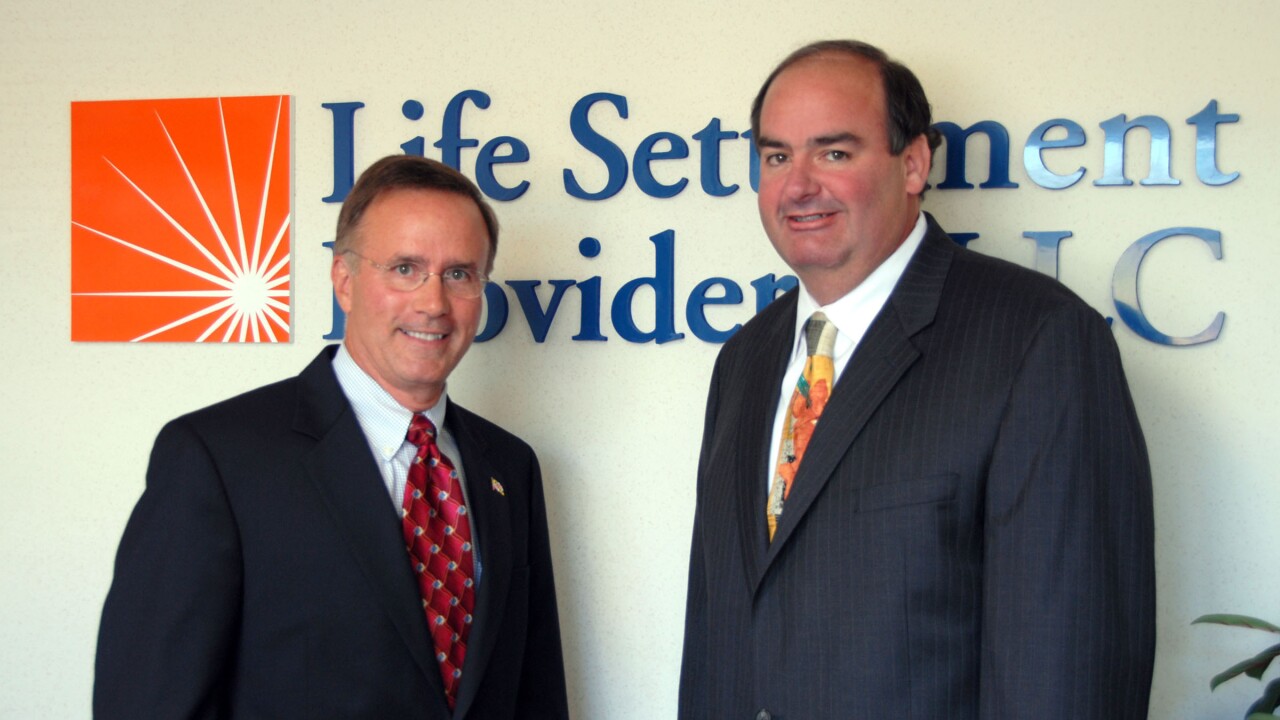
-
New York — New York Life Insurance Co. announced that Sheila Davidson has been named chief legal officer and general counsel. Her new responsibilities include the Corporate Compliance, the Office of Business Conduct, the Corporate Ombudsperson and the Chief Tax Counsel. She also will continue to have responsibility for the Office of the General Counsel, the Office of the Secretary and the Office of Governmental Affairs.
November 9 -
Toronto — Zurich Insurance Co., a commercial property/casualty insurance provider serving the global corporate, large corporate, middle market, small business, specialties and programs sectors, announced that Robert Landry will retire as head of its Toronto, Ont.-based Canadian operations at the end of the year. Alister Campbell, previously senior vice president at ING, will be appointed chief agent and chief executive officer for Zurich in Canada, subject to board and regulatory approval.
November 9 -
Des Plaines, Ill. — The National Insurance Crime Bureau (NICB), a non-profit organization dedicated to preventing, detecting and defeating insurance fraud and vehicle theft through information analysis, investigations, training and public awareness, is launching a free service to help protect the nation's consumers.
November 9

